How do researchers know a discovery is truly caused by the factors they think it is — and not by something they have not discovered yet? That question drove the development of sensGAN, a new machine-learning model developed at UW by recent biostatistics graduate Yifan Lin and her advisor Kevin Z. Lin. The tool was designed to help researchers evaluate the reliability of Alzheimer’s disease findings by estimating whether unknown biological elements could account for observed results.
In the News
Headlines featuring UW Biostatistics people and research.
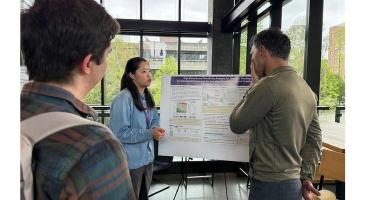
Biostatistics graduate’s artificial intelligence model could reshape how scientists evaluate disease research findings
The Daily - University of Washington,


UW study identifies genetic changes tied to more severe cognitive symptoms in schizophrenia
UW News,
Matt Conomos, a senior research scientist with the UW Biostatistics Genetics Analysis Center, co-authored a recent study that supports the idea that deletions in genes that regulate early brain and neuron development are associated with more severe features of schizophrenia spectrum disorders, particularly lower cognitive abilities.


Secondary care gap tied to prostate cancer deaths
UW Medicine Newsroom,
An observational study of more than 83,000 older U.S. men with localized prostate cancer found that Black and white patients were equally likely to receive secondary treatment after initial therapy, whether their first treatment was surgery or radiation. However, among patients who did not receive secondary treatment, Black men had up to two times higher risk of dying from prostate cancer than white men. Affiliate faculty Ruth Etzioni is co-author of the study.


Nobel-style prize celebrates University's revolutionary `R' software
University of Auckland,
Thomas Lumley, PhD ’98, an affiliate biostatistics faculty member in the University of Washington School of Public Health, is among the recipients of the $1 million 2026 Rousseeuw Prize in Statistics, considered the Nobel Prize for statisticians. Lumley and others were recognized for their pivotal achievements in advancing R programming language.
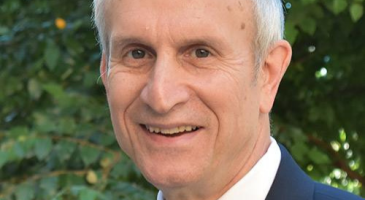
How Biostatistics Expertise Led to a Career of Propelling Ethical Clinical Trial Design
How This Is Building Me Podcast,
In this episode, world-renowned oncologist D. Ross Camidge, MD, PhD sat down with Tom Fleming, PhD, a professor of biostatistics at the University of Washington School of Public Health in Seattle to discuss how Fleming's interest in biostatistics led to a multifaceted career in clinical trial design and analysis.


Biostatistics receives top ranking by U.S. News and World Report
The Daily - University of Washington,
UW recently ranked No. 3 in the world for biostatistics graduate programs by U.S. News & World Report (USNWR) in their annual report published April 7. Faculty members Ken Rice and Marco Carone were interviewed as well as current PhD student Bumjun Park.

Are Bayesian Statistics Coming to a Clinical Trial Near You?
MEDPAGE TODAY,
The FDA's move to incorporate Bayesian statistical methods into clinical trials of drugs and biologics garnered special treatment in JAMA this week. UW Professor of Biostatistics Thomas Fleming weighs in with his thoughts.


New Podcast Calls Attention to Underrecognized IRGT Trial Design
NIH Pragmatic Trials Collaboratory,
In a new episode of the NIH Collaboratory Podcast, Drs. Jonathan Moyer and David Murray discussed their recent publication, “Evaluating Analytic Models for Individually Randomized Group Treatment Trials With Complex Clustering in Nested and Crossed Designs.” The episode was moderated by Patrick Heagerty, co-chair of the Biostatistics and Study Design core working group and professor of biostatistics at the University of Washington.