Stories
Featured stories about UW Biostatistics people, research, and impact.
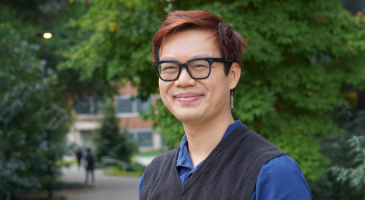
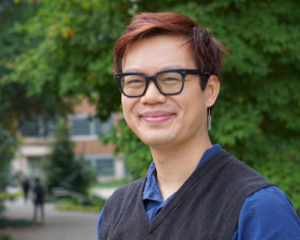
University of Washington School of Public Health researcher Kevin Lin, along with his collaborators in the UW School of Medicine, recently received a $75,000 development award from the UW Alzheimer’s Disease Research Center (ADRC) for a project examining this mystery through microglial resilience and data integration.
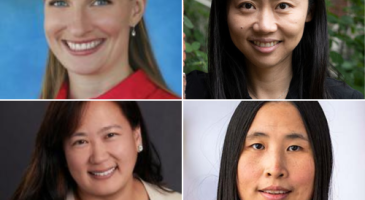
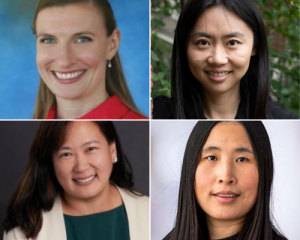
Three faculty members and one alumni from the University of Washington Department of Biostatistics have been elected 2026 Fellows of the American Statistical Association. Fellows are named for their outstanding contributions to statistical science, leadership, and advancement of the field.
University of Washington researchers created a framework that helps compare phylogenetic trees when they don't have the same set of species. The solution called Towering space organizes BHV spaces into a nested hierarchy, where transitions between BHV spaces are possible by removing or adding leaves to the trees.
University of Washington researcher Kevin Lin is working to reconstruct the hidden history of a cell, from healthy to diseased, using a single tissue snapshot. With a $2 million award from the National Institute of General Medical Sciences (NIGMS), he aims to develop a suite of AI-driven tools that can build a “computational time machine” for human biology that will help researchers identify therapeutic targets at the earliest stages of disease, long before patients experience symptoms.
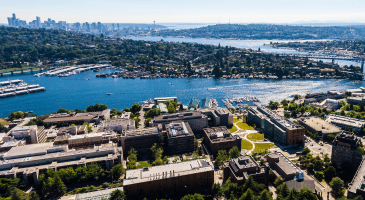
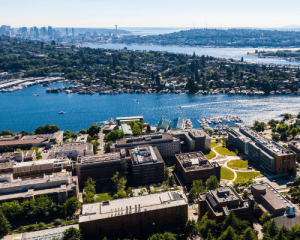
The University of Washington Department of Biostatistics continues to rank among the top ten graduate programs in the United States, according to the U.S.News & World Report’s 2026 Best Graduate Schools released late Monday.
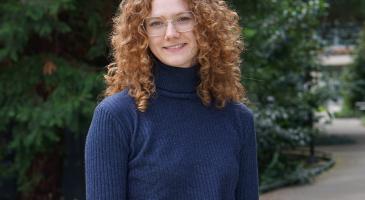
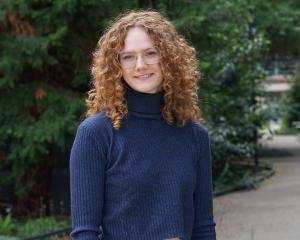
Q&A with PhD student Willow Crawford-Crudell discussing what inspired her to pursue biostatistics, experience in the UW PhD program, and goals for the future.

In 2026, student teams from the UW Biostatistics MS Capstone program collaborated with UW research centers to evaluate trends in treatments for patients with breast cancer and appendicitis. A third project explored whether cell shape is related to cellular function, and whether this relationship can be detected computationally.
Ali Shojaie awarded a $3M grant from the National Institutes of Health (NIH) to find a way to diagnose Alzheimer’s disease and related dementias long before symptoms appear.