Applying artificial intelligence (AI) and machine learning (ML) methods to cancer research holds great promise, but the deep programming expertise required to do so is not a skill most clinicians currently possess.
Awan Afiaz, a biostatistics PhD student in the University of Washington School of Public Health, is part of a research team developing software to help clinicians close this gap.
Supervised by Jeff Leek (MS ’05, PhD ’07), vice president and chief data officer at Fred Hutch Cancer Center and an affiliate faculty at UW who is principal investigator (PI) for the project, and with support from a 2025 Sloan Precision Oncology Technology Dissemination Award, Afiaz and the team are developing Scorcher, an open-source R package that lets investigators build complex AI/ML models using intuitive, sequential steps rather than hundreds of lines of code.
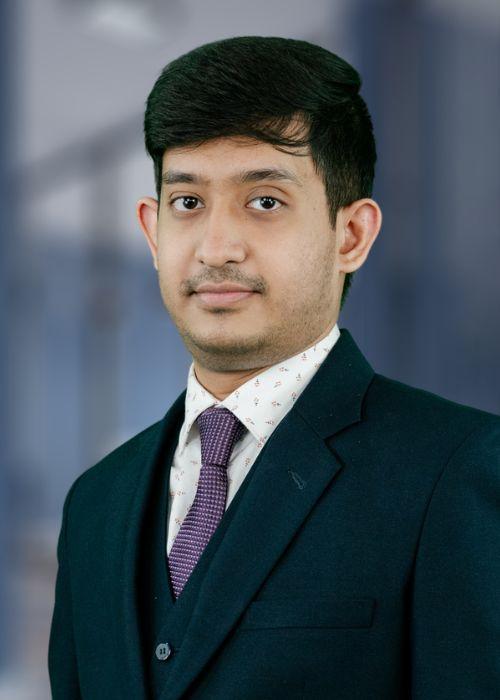
"The potential impact is really about democratization. When we make AI/ML tools accessible to physician-investigators who understand the clinical problems best, we can accelerate the translation from research to patient care,” said Afiaz.
The project will pilot Scorcher on two clinical problems: automating cytogenetic testing for hematologic cancers and predicting pulmonary embolism risk using chest X-rays and EKGs. Both applications target areas where AI/ML could accelerate diagnosis.
Afiaz will serve as the analytic lead for the pulmonary embolism pilot, contribute to software development, and develop educational materials based on what the team learns.
"For the pulmonary embolism work, this means we could help clinicians identify at-risk patients faster using routine diagnostics they're already ordering. That could directly impact treatment decisions and outcomes," said Afiaz.
The pulmonary embolism pilot will utilize high-quality datasets of chest x-rays and EKGs from cancer patients that have been curated for many years by clinician-researcher Barbara Lam's group at Fred Hutch, another Scorcher team member.
The Scorcher team includes investigators from UW, Fred Hutch, and the Seattle Children's Cancer Consortium. Stephen Salerno, postdoctoral researcher in biostatistics at Fred Hutch, will serve as co-PI.
"This project is different because we're not just building models," Afiaz said. "We're building the infrastructure that helps others build models. That multiplier effect is what makes this work particularly meaningful."


