About Short Courses
Short course registration is now closed.
Short course access information was emailed to registrants on November 13. Contact Deb Nelson at nelsod6@uw.edu if you didn't receive the email or have questions.
A flat fee allows participants access to all short courses. Recordings of all short courses will be available to registrants through December 31, 2025. All courses will be taught online.
Saturday, November 15, 2025
8:30 a.m. to Noon PST
Introduction to causal inference using machine learning methods – Part 1
Instructor: Charles Wolock, PhD, University of Rochester
1 p.m. to 4:30 p.m. PST
Introduction to causal inference using machine learning methods – Part 2
Instructor: Charles Wolock, PhD, University of Rochester
Course Description
In this course, we will provide an overview of modern statistical techniques for answering causal questions, with a focus on observational biomedical data. When clinical trial data are not available, observational studies provide an alternate route to causal inference; however, the exposure-outcome relationship may be confounded by other important patient characteristics. As a result, specialized techniques are needed to disentangle observed relationships and infer causal effects. We will focus primarily on recent advances in the field of debiased machine learning, which facilitates the use of state-of-the-art machine learning tools to flexibly adjust for confounding while yielding valid statistical inference. We will present the Super Learner framework, an implementation of model stacking, as one possible means of performing flexible, pre-specified adjustment for confounding.
We will primarily discuss methods for comparative effectiveness studies for single time-point interventions, while briefly introducing the multi-time-point extension of these methods. Methods will be illustrated using data from recent observational studies. Analyses will be demonstrated in R, but knowledge of R is not required for this course. In addition to lectures, the course will include in-class, hands-on activities to allow students to familiarize themselves with the methods and tools.
This course is geared towards health science researchers with at least basic experience in data analysis and statistics. An elementary understanding of the following concepts would be helpful: confounding, probability (e.g., what is meant by the distribution of random variable, its mean and its variance), statistical inference (confidence intervals, hypothesis tests), and regression (linear and logistic). Advanced knowledge of these topics is useful, but not necessary.
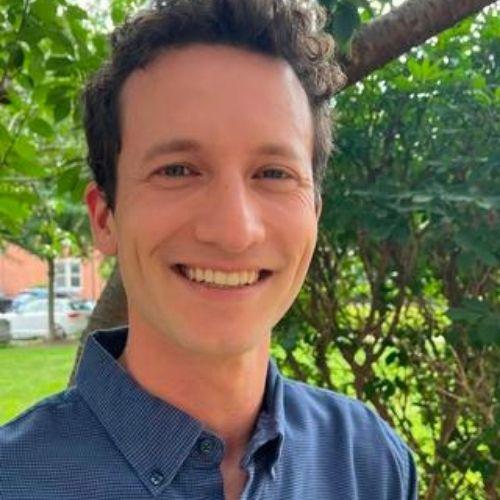
Charles Wolock is an assistant professor in the Department of Biostatistics and Computational Biology at the University of Rochester. He received his PhD in 2023 from the Department of Biostatistics at the University of Washington and completed a postdoctoral fellowship in the Department of Biostatistics, Epidemiology and Informatics at the University of Pennsylvania. His research is focused on nonparametric and semiparametric statistics, machine learning, and survival analysis. He is especially interested in statistical epidemiology and causal inference. Prior and ongoing collaborative projects include work in mental health, infectious diseases, and genomic medicine.
Sunday, November 16, 2025
8:30 a.m. to Noon PST
Enhancing randomized clinical trials with real-world data: A causal inference perspective
Instructor: Shu Yang, PhD, North Carolina State University
Motivation and Course Description
The 21st Century Cures Act, enacted in 2016, highlights the importance of precision medicine and the utility of real-world data (RWD) to accelerate the development and evaluation of new treatments. It encourages the FDA and other regulatory bodies to consider real-world evidence (RWE) alongside traditional randomized controlled trials (RCTs).
RCTs are widely considered the gold standard for causal inference due to their internal validity. However, they often suffer from practical limitations such as restrictive eligibility criteria and limited sample sizes. In contrast, RWD offers broader population coverage and reflects clinical practice more realistically but is prone to confounding and other biases. Integrating RCTs with RWD offers the potential to combine the strengths of both data sources, achieving internal validity from RCTs and external validity from RWD, thereby enabling more generalizable, efficient, and timely treatment evaluations.
This short course will introduce statistical frameworks and methodologies that facilitate the integration of RCTs and RWD to:
- Improve the generalizability of RCT findings to broader patient populations,
- Enhance the estimation of treatment effect heterogeneity for precision medicine, and
- Address challenges such as covariate shift, unmeasured confounding, and model misspecification through robust statistical and machine learning techniques.
Simulated case studies and hands-on demonstrations using publicly available R packages will support the conceptual and methodological content. A foundational understanding of clinical trials and causal inference is recommended.
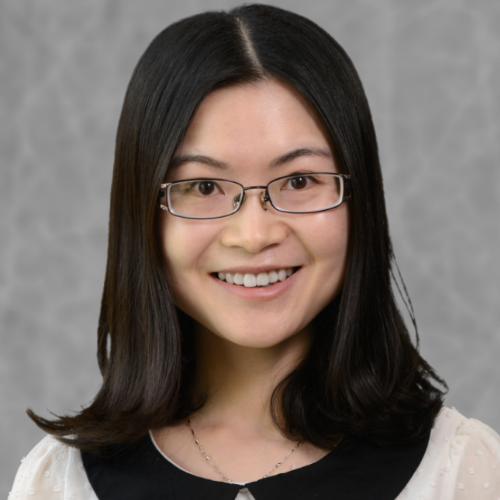
Shu Yang is Professor of Statistics, Goodnight Early Career Innovator, and University Faculty Scholar at North Carolina State University. She earned her Ph.D. in Applied Mathematics and Statistics from Iowa State University and completed her postdoctoral training at the Harvard T.H. Chan School of Public Health. Her research focuses on causal inference and data integration with applications to comparative effectiveness research. She has made significant contributions to methods for missing data, spatial statistics, and real-world evidence, and has served as PI on multiple NIH, NSF, and FDA-funded projects. She is a recipient of the 2024 COPSS Emerging Leader Award.
1 p.m. to 4:30 p.m. PST
Using covariates for greater precision and power in randomized trials
Instructor: Ting Ye, PhD, University of Washington
Course Description
Since the FDA released a guidance for industry on “Adjustment for Covariates in Randomized Clinical Trials for Drugs and Biological Products” in May 2023, there has been increased interest in using covariate-adjusted analyses to improve efficiency for demonstrating and quantifying treatment effects. This short course will cover key concepts and useful methods for covariate adjustment with continuous, discrete, and time-to-event outcomes, and illustrate the impact of the methods through case studies. We will also provide a dedicated session with hands-on activities using our R package family RobinCar and RobinCar2 to allow participants to familiarize themselves with the methods and tools.
In Part I of this course, we first provide an overview of the key elements and concepts of covariate adjustment. Then for continuous, discrete, and time-to-event outcomes respectively, we will introduce the state-of-the-art covariate adjustment methods (estimand, estimation, and inference), their pros and cons, and how to account for practical issues (e.g., stratified randomization, sparsity, missing data). We will illustrate the use of the methods through case studies.
In Part II of this course, we introduce our R package family RobinCar and RobinCar2, which is a one-stop and user-friendly platform to apply covariate-adjustment methods for continuous, discrete, and time-to-event outcomes for trials with simple, permuted block, and Pocock-Simon minimization randomization schemes. We present step-by-step walk-through of how to apply the covariate adjustment methods using these R packages. Participants will work on hands-on exercises of covariate adjustment on trial data.
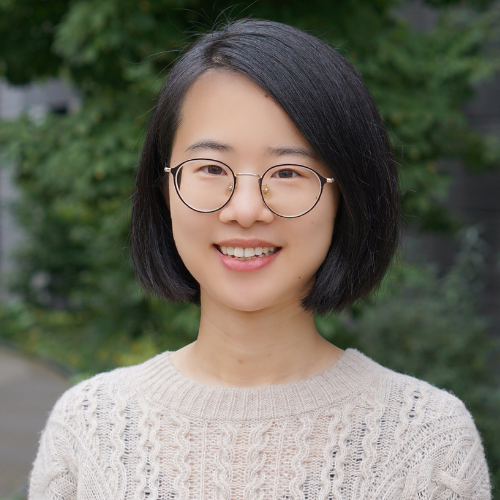
Ting Ye is an Assistant Professor in Biostatistics at the University of Washington. Her research aims to accelerate human health advances through data-driven discovery, development, and delivery of clinical, medical, and scientific breakthroughs, spanning the design and analysis of complex innovative clinical trials, causal inference in biomedical big data, and quantitative medical research. Ting is a recipient of the School of Public Health's Genentech Endowed Professorship and the NIH Maximizing Investigators' Research Award (MIRA).