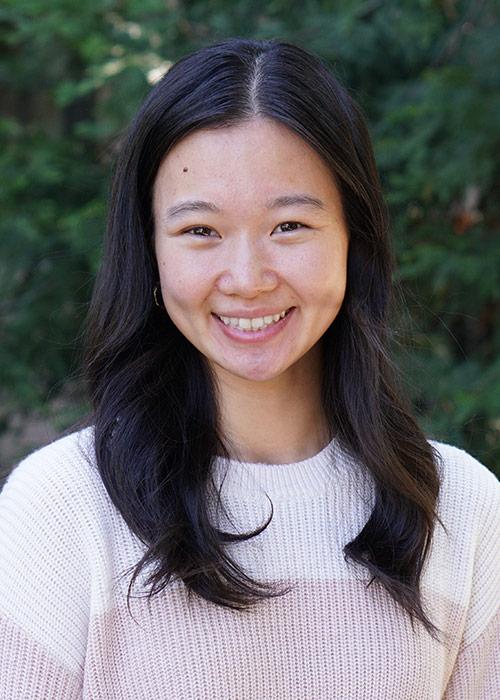
- Home State: Rockville, MD
- Program & Year: PhD, second year
- More Information: Grace's Page
“I study biostatistics because understanding the assumptions that underlie the models and tests is critical in identifying real solutions to current public health challenges and unsettled medical questions.”
Q&A
What motivated you to pursue a PhD in biostatistics?
My interest in the increased use and development of complex innovative clinical trial designs motivated me to pursue a PhD in biostatistics. I wanted to fully understand the intricacies of these designs and learn to develop new methodology that could leverage the large amounts of data available. I wanted to gain the expertise and skills through a PhD to do this kind of research, and in the future, help discover effective treatments when traditional approaches are not feasible, and/or lower the cost of new therapies.
Why UW Biostatistics?
In line with why I wanted to pursue a PhD, I felt that it was crucial to develop a strong theoretical foundation in order to properly understand the implicit assumptions and interpretations of different statistical approaches. UW Biostatistics was an appealing program due to its focus on theoretical rigor as well as the many opportunities to get involved in active studies that are using innovative designs and analyses through Fred Hutch and other research institutions.
How would you describe your experience as a UW Biostatistics student?
So far the experience has been difficult but rewarding. I’ve learned a lot through the courses last year and transitioning back into research this year by exploring different research areas with different faculty members has been really exciting.
What research are you currently conducting?
I’m currently working as a research assistant with Lyndia Brumback, conducting statistical analyses on longitudinal data in palliative care studies that aim to evaluate the implementation of an intervention designed to promote goals of care discussions between patients and their doctors. Recently, I’ve started exploring other research areas that span across different therapeutic areas. In particular, I have been working with Fei Gao on survival methods to estimate counterfactual treatment effects using external control data in HIV prevention efficacy studies.
What are your future plans and have they changed since you started your degree program?
I’m still unsure about my future plans, but it’s been encouraging speaking to different people in the field and hearing them all speak passionately about their research and collaborative work.
What advice would you give to a student who is considering the UW Biostatistics PhD program?
Reach out to any of the current students or faculty members especially if they are doing research in an area you’re interested in! Consider what life in Seattle would look like for you. PhDs are long programs, and it’s helpful to be excited about the city you’re going to be in and people you’ll be meeting.
Anything else you’d like people to know about you?
I love food (especially a good bakery) and will have places bookmarked for years so if you have any food recommendations anywhere, I will gladly take them.


