Vaccine hesitancy rose significantly during the COVID-19 pandemic and remains a growing challenge today. Understanding what drives concerns about vaccines remains a crucial public health goal, as falling vaccination rates have led to the recent resurgence of preventable diseases.
During the COVID-19 pandemic, a number of studies looked at the individual reasons people cited for delaying or refusing a vaccine, but research recently published in PLOS Global Public Health analyzed more than 310,000 responses from the U.S. Covid-19 Trends & Impact Survey (CTIS) to model how the different reasons selected by an individual might be related. Respondents could select as many choices as they wanted from a list of 15 possible reasons. By grouping an individual’s responses into patterns, researchers identified two different types of hesitancy: people with health-related concerns and people who distrust the government and vaccines.
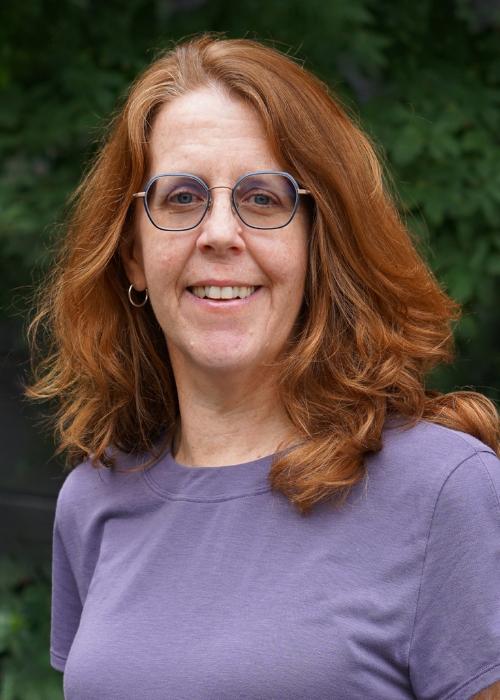
“Wanting to make sure it's safe and effective, and not trusting the government are pretty different beliefs, and messaging designed for a person who was afraid of side-effects or an allergic reaction probably won’t be as effective for someone who flat-out doesn't trust the government and doesn’t believe the vaccine will actually work.” said Robin Mejia, senior author of the paper and an assistant teaching professor of biostatistics in the University of Washington School of Public Health, who worked with colleagues at Carnegie Mellon University and the University of Wisconsin on the study.
CTIS began collecting responses in the early phase of COVID-19 vaccine availability and continued through the spring of 2021 when vaccines were available to all U.S. adults. This allowed researchers to examine responses over time.
“We actually saw the differences between those groups in the data. Over time, the relative size of the health-conscious group shrank compared to the size of the distrustful group,” said Mejia. “That is, at the end of the rollout, there were fewer people citing primarily health-based concerns, suggesting that messaging about safety worked.”
The team also looked at response patterns by race.
“In each group, we saw a health-concerned and a distrustful class of hesitancy emerge, but the distrustful class was slightly different for people who were Black or Hispanic – they were more likely to also select a health-related reason, compared to White people,” said Mejia.
In earlier work, Mejia showed that at the start of the vaccine rollout, hesitancy was high among Black respondents, but went down over the course of the rollout. However, the same rate of decrease did not occur among White respondents. The new work suggests the trust concerns identified by White respondents may be harder to combat than for other groups. The research highlights the importance of assessing the underlying belief structures that drive vaccine hesitancy. “Working with different groups will require different strategies,” said Mejia.
“Combatting vaccine hesitancy is hard, as we are seeing with the resurgence of diseases like measles this year. When I was growing up, we didn’t have measles outbreaks. This research focused specifically on COVID-19, but our models identified similar types of hesitancy patterns among different groups of people and at different times during the pandemic. This supports growing concerns about trust in institutions as a key factor in declining vaccination rates.”
Mejia was a faculty lead on the COVID-19 Trends & Impact Survey (CTIS), which received funding from the Centers for Disease Control (CDC) and an unrestricted gift from Meta. CTIS data is housed at the Inter-university Consortium for Political and Social Research (ICPSR 39207) and is available to researchers. https://www.icpsr.umich.edu/web/ICPSR/studies/39207/versions/V1


