One of the biggest mysteries in current Alzheimer’s research is the phenomenon of resilience: why roughly 30 percent of people who never show signs of cognitive decline are later found to have high levels of Alzheimer’s pathology in their brains.
University of Washington School of Public Health researcher Kevin Lin, along with his collaborators in the UW School of Medicine, recently received a $75,000 development award from the UW Alzheimer’s Disease Research Center (ADRC) for a project examining this mystery through microglial resilience and data integration.
“Microglia are the resident immune cells of the brain. Think of them as the brain's cleanup crew,” said Lin, an assistant professor of biostatistics. He noted that for some people these cells seem to successfully contain or shield the brain from pathology while in others they become dysfunctional and contribute to damage.
UW researcher Kevin Lin receives Rising Star Award
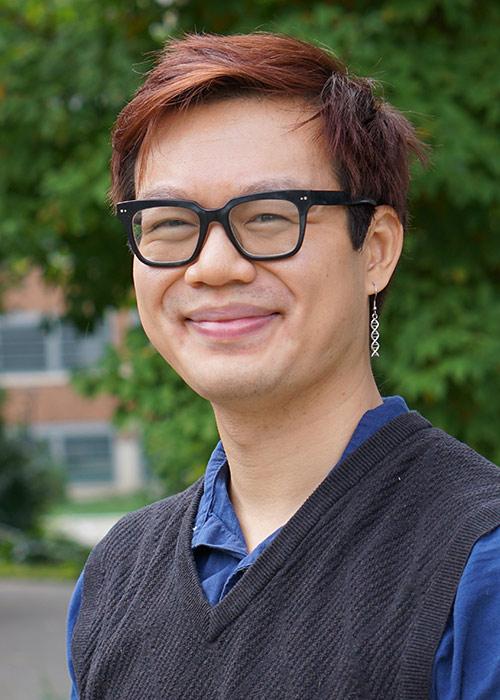
Kevin Lin, a UW assistant professor of biostatistics, received a Rising Star Award from the Research Education Component (REC) of the Alzheimer's Disease Research Center (ADRC) Program for his work on “Integrating Microglial Form and Function in Alzheimer's Disease via Deep Learning.”
The award recognized preliminary work Lin conducted leading up to the UW ADRC development award project outlined above.
The Rising Star Awards honor outstanding poster presentations from early-career researchers across the ADRC network. The awards were presented at the 2026 spring ADRC meeting in Atlanta.
Collecting biological samples for the project would be challenging because tissue samples cannot easily be taken from living human brains. Identifying the right data and determining the most appropriate computational methods to use are also crucial, as methods only have impact when paired with high-quality, clinically meaningful data.
The team’s innovation lies in building an AI-based pipeline to link two completely different data types: the physical 3D shapes (morphology) of immune cells captured via high-resolution microscopy and the genetic blueprints (transcriptomics) of those same cells.
“By linking structure to function, we can finally begin to see the full picture of what makes a brain resilient,” said Lin.
The computational framework will allow the team to identify specific gene programs that drive protective cell shapes. The long-term goal is to identify treatment pathways that engineer or encourage protective microglial behaviors in patients, potentially slowing or even preventing cognitive decline. The team believes their framework could be used to study many other brain cell types and diseases.
Lin is excited to have students involved with the project, noting that they bring the rigorous mathematical and algorithmic thinking necessary to building stable AI models that can handle the noise of biological data.
“Students get to work on the front lines of a rapidly growing field and gain experience in deep learning, high-dimensional data analysis, and, perhaps most importantly, how to collaborate across disciplines with biologists and clinicians,” said Lin. “There are so many open questions in Alzheimer’s research that require dedicated biostatisticians to step up and re-envision how we look at data. We are just getting started.”
The project team includes Ali Shojaie, professor and chair of the UW Department of Biostatistics who leads the ADRC Data Management and Statistics Core, Suman Jayadev (The Jayadev Laboratory) and Katherine Prater (The Prater Lab) with UW Neurology, and Caitlin Latimer (Latimer Lab) with UW Medicine Pathology.


