New treatments designed to slow the progression of Alzheimer’s disease are most effective when given in the early stages of the disease. But decades may pass before individuals exhibit clinical symptoms and receive a dementia diagnosis. This makes early detection a major priority for Alzheimer’s disease and related dementias (ADRD) researchers.
Ali Shojaie, professor and interim chair of the Department of Biostatistics at the University of Washington, is one of the researchers working to address this crucial issue. With the support of a $3M grant from the National Institutes of Health (NIH), Shojaie is co-leading a team that hopes to find a way to diagnose ADRD long before symptoms appear.
“This is a critical juncture in research on ADRD,” said Shojaie. “On the one hand, with the aging population, these neuro-degenerative diseases are becoming more prevalent and have an increasing societal burden. On the other hand, the development of new treatments opens the door, for the first time, to slowing the progression of these devastating diseases.”
The project will leverage advances in machine learning (ML) and AI to develop non-invasive biomarkers for early detection of ADRD. By analyzing existing brain imaging data, the team aims to better understand how ADRD develops and progresses in the brain.
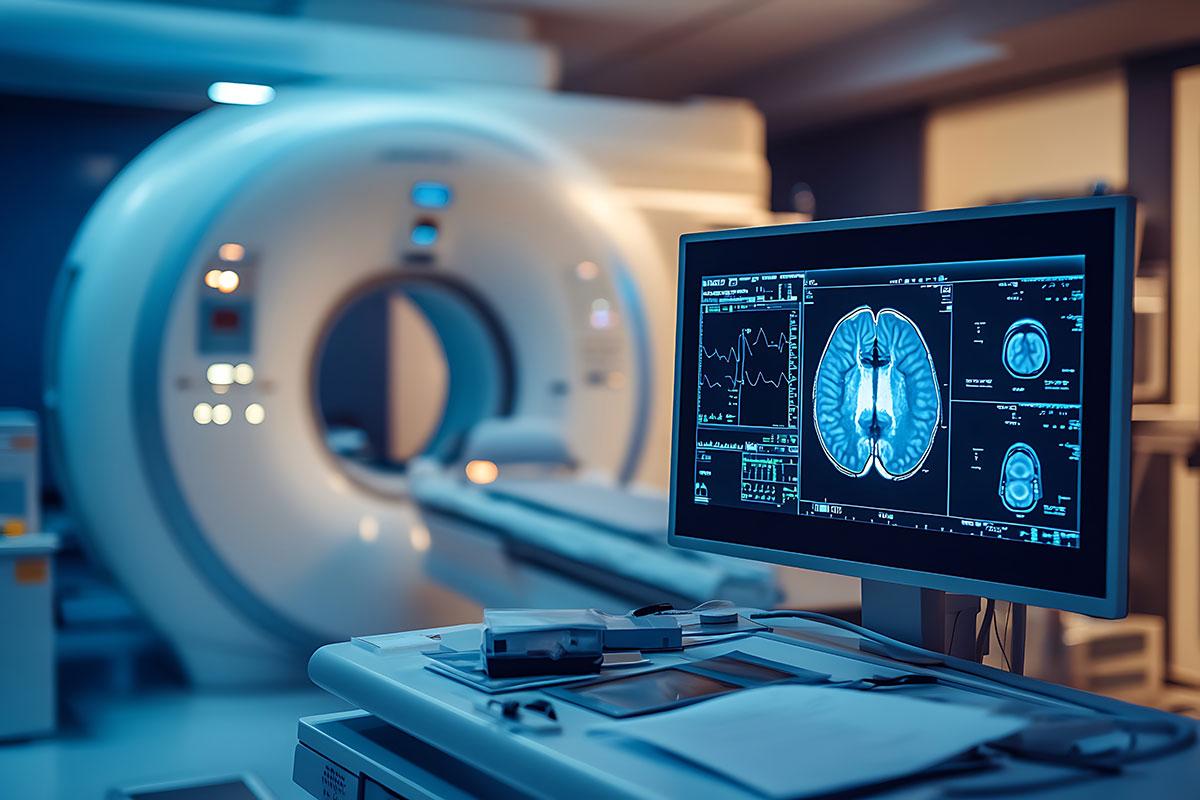
“We propose using resting-state functional MRI (fMRI) to look at the functional connectivity changes in people who are going through the disease progression, versus healthy people,” said Abolfazl Safikhani, an assistant professor in the George Mason University Department of Statistics who is the project’s co-principal investigator. “By comparing functional connectivity changes among healthy individuals with those suffering from the disease, we aim to identify individuals at risk. The approach shows great promise—when we compute the functional connectivity in a novel way, we can classify Alzheimer’s patients with more than 98 percent accuracy.”
The study will rely on existing fMRI datasets rather than collecting new scans. While efficient, this approach presents challenges. Machine learning and AI models typically require large amounts of data, but current datasets include relatively small sample sizes drawn from diverse segments of the population.
“Developing methods that work for these small data sets that can lead to generalizable discoveries introduces interesting statistical challenges. In addition to using regularization approaches, we plan to use ‘transfer learning’ to integrate relevant data from multiple sources to address these challenges,” said Shojaie.
Researchers must also address technical challenges inherent in brain imaging data, especially fMRI. These include imaging artifacts, differences across study participants and research sites, and complex patterns that vary over time and across brain regions.
by Deb Nelson


